
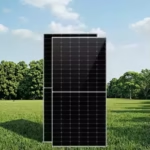
Wholesale Solar Panels By The Pallet: Price Per Watt By Buy
Buying solar panels individually might work for small DIY projects, but if you are an installer, distributor, or property developer, the math changes quickly. Sourcing wholesale solar panels by the pallet is the most effective way to lower your cost per watt and ensure your project margins remain profitable. When you purchase in bulk, you are not just buying equipment; you are securing supply chain stability.
This guide covers everything you need to know about purchasing solar panels by the pallet, from understanding logistics and freight costs to evaluating panel quality and identifying genuine wholesale value. Whether you are stocking up for a residential project or managing a large-scale commercial installation, understanding how to navigate bulk procurement is the key to scaling your operations.
Key Takeaways
- Buying by the pallet typically offers the lowest price per watt due to economies of scale.
- Standard pallet quantities usually range from 25 to 30 panels, depending on wattage and dimensions.
- Freight shipping requires specific inspection protocols to ensure panels arrive undamaged.
- Always verify certifications like UL and IEC before finalizing a bulk purchase.
- “Wholesale” pricing can be subjective; compare total project costs, including shipping and insurance, rather than just the panel price.
- Check for supply chain consistency; buying the same brand and model across a project simplifies installation and future servicing.
Wholesale Solar Panels By The Pallet
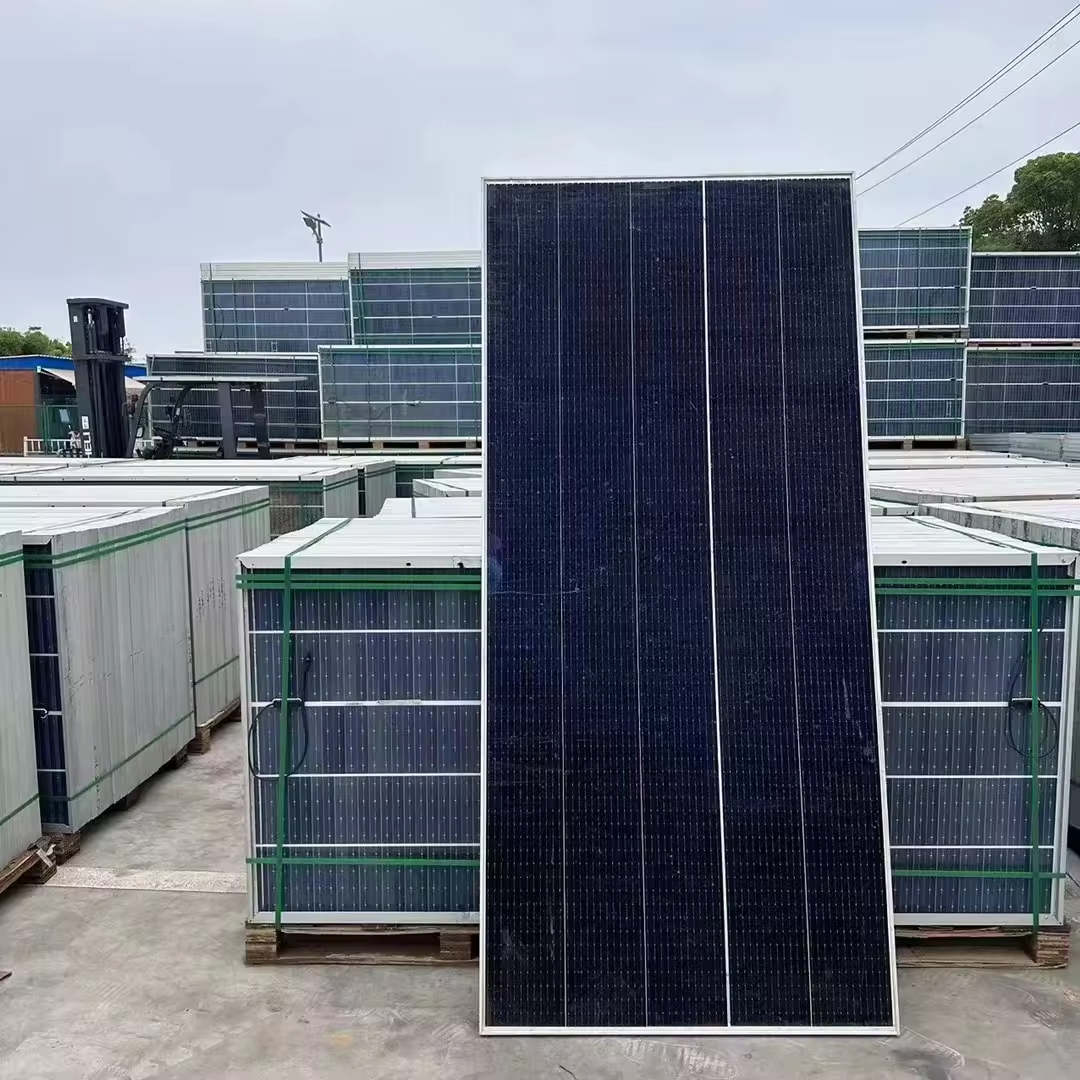
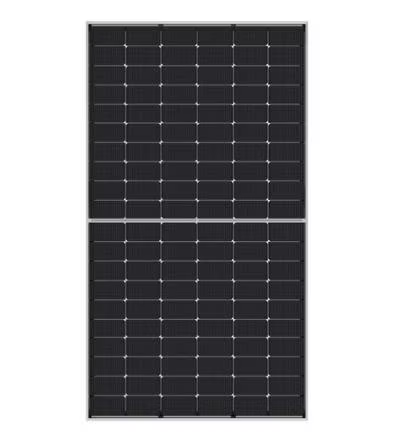
Purchasing solar panels by the pallet is the industry standard for procurement in the solar installation sector. At this level, manufacturers and major distributors package modules vertically or horizontally on heavy-duty wooden pallets, secured with corner guards, protective film, and industrial-strength strapping. This configuration is designed to withstand the rigors of LTL (Less-Than-Truckload) and FTL (Full Truckload) freight.
This buying model works by consolidating logistics. Instead of shipping individual cardboard boxes, the supplier treats the pallet as a single, uniform unit. This reduces handling time at warehouses, minimizes the risk of micro-cracking during transit, and significantly lowers the freight cost per panel.
Who is this method best suited for? It is intended for professional solar installers, contractors, regional distributors, and large-scale developers who have the storage capacity and equipment (like forklifts or pallet jacks) to receive and manage these shipments. If you are a residential homeowner looking to install a single system, buying a full pallet may provide more panels than you need, making it less practical unless you are doing a massive multi-home project.
When placing a pallet-level order, expect lead times that include warehouse processing, palletization, and freight transit. Always confirm if the supplier requires a loading dock for delivery or if they need to provide a liftgate service to offload the pallet at a job site.
Why Buy Solar Panels By The Pallet Instead Of Individual Units?
The primary driver for buying by the pallet is the drastic reduction in cost per watt. When suppliers move units in bulk, their operational costs drop. They pass these savings on to you in the form of lower unit prices.
Beyond the initial price, there is the advantage of logistical simplification. Ordering 30 individual panels might result in 30 separate shipments, increasing the risk of transit damage and creating a nightmare for tracking and receiving. A palletized shipment arrives as one controlled unit.
Cost and Logistics Comparison
| Benefit | Individual Purchase | Pallet Purchase |
|---|---|---|
| Cost Per Watt | Higher (Retail) | Lowest (Wholesale) |
| Shipping Risk | High (Small parcel) | Lower (Freight optimized) |
| Inventory | Hard to track | Streamlined units |
| Project Scaling | Inconsistent | Reliable supply |
Buying in pallet quantities also allows contractors to maintain a consistent supply for ongoing installations. If your team is installing 10 systems per month, having 3-4 pallets on hand ensures you never face delays due to supply chain shortages or unexpected shipping backlogs.
Selling Point: Order your pallet of solar panels today through our store and lock in wholesale pricing before stock runs out — contact our team for a custom quote tailored to your project size.
What Is The Average Price Per Watt For Wholesale Solar Panels?
The price per watt is the universal metric for evaluating solar value. It allows for an apples-to-apples comparison regardless of the panel’s physical size or wattage output.
Here is the reality: market conditions change rapidly. According to recent industry reporting [Source needed: 2024 Solar Industry Price Index], wholesale price-per-watt values for standard monocrystalline panels currently fluctuate between $0.20 and $0.45 per watt. This means a 400W panel could range from $80 to $180 depending on the brand tier, volume, and current market supply.
So, what does this look like in practice? A top-tier, high-efficiency panel from a Tier 1 manufacturer will sit at the higher end of that range. Lower-cost, secondary-market, or slightly older technology panels will push toward the lower end.
Factors influencing this price include:
- Efficiency Ratings: High-efficiency panels (22%+) command a premium.
- Brand Tier: Established manufacturers with long track records often charge more for the peace of mind their warranties provide.
- Order Volume: Buying 50 pallets will naturally secure a better rate than buying one.
How Many Solar Panels Are In A Pallet?
There is no “one size fits all” answer, but most standard pallets contain between 25 and 35 solar panels. The exact count is dictated by the dimensions of the panel, the thickness of the frame, and the packaging specifications of the manufacturer.
For example, a high-wattage residential panel with a 30mm frame may stack differently than a commercial bifacial module with a thicker 35mm or 40mm frame. Manufacturers aim to maximize the space inside a standard shipping container or truck trailer, so they design the pallet load to be as dense as possible without risking damage.
When reviewing a supplier’s quote, always look for the “panels per pallet” specification. If you are planning for a 10kW residential system, knowing if the pallet holds 25 units or 30 units will help you calculate exactly how many pallets you need to order to avoid having too many leftovers or, worse, running short mid-install.
What Is The Solar Panel Pallet Price For A Standard Order?
The total cost for a standard pallet is calculated by multiplying the (Price Per Watt) x (Total Wattage of Pallet). Remember to factor in shipping and handling.
- Shipping/Freight: For a single pallet, expect freight costs to range between $200 and $600, depending on your distance from the distribution hub.
- Residential Delivery: If you are asking for delivery to a residential address rather than a commercial loading dock, most carriers add a residential surcharge, typically between $100 and $200.
Helpful tip: Always ask the supplier to separate the product cost from the freight cost in the quote. This gives you transparency on how much you are actually paying for the hardware versus the transport.
Can I Buy Just One Pallet Of Solar Panels?
Yes, most wholesale distributors allow single-pallet orders. However, some large-scale manufacturers may require minimum order quantities (MOQs) of 5 to 10 pallets.
If you are a smaller installer, focus on distributors rather than manufacturers. Distributors buy in containers and break them down into pallets, specifically to serve smaller contractors. You might pay a slightly higher price per watt than a massive commercial firm, but you gain the flexibility to order the exact amount you need for your projects.
Where To Buy Wholesale Solar Panels In Bulk For Residential Projects
Finding a reliable source is about vetting the business model. You have three main channels:
- Direct Manufacturers: Best for massive utility-scale projects where you are ordering truckloads at a time.
- Authorized Distributors: The “sweet spot” for most contractors. They hold local stock, handle the shipping logistics, and provide the technical support that manufacturers often lack.
- Online Wholesale Marketplaces: Convenient, but requires strict due diligence. Always verify that the marketplace is authorized to sell the specific brand.
Look for suppliers that provide transparent warranty documentation. A warranty is only as good as the company backing it. If the supplier cannot provide a clear process for handling RMAs (Return Merchandise Authorizations), look elsewhere.
How To Find Discounted Wholesale Solar Panels Sold By The Pallet
The best way to find deals is to be flexible. End-of-season sales, overstock deals, or “B-stock” (panels with minor cosmetic scratches that do not affect performance) are excellent ways to lower your costs.
When negotiating, ask about “older stock.” Sometimes a manufacturer releases a new 450W panel, and they need to clear out the 400W inventory. If your project specs allow for the 400W model, you can often negotiate a significant discount on the entire pallet. Always request a written statement confirming that these units still carry the full manufacturer warranty.
Are Used Solar Panels For Sale By The Pallet Worth Buying?
Purchasing used solar panels can be a viable strategy for non-critical applications, such as off-grid sheds, RVs, or experimental testing. However, for a professional installation on a client’s roof, the risks often outweigh the savings.
Used panels generally lack valid warranties. If they fail three years into a project, you (the installer) may be held liable by your client.
| Feature | New Panels | Used/Scrap Panels |
|---|---|---|
| Warranty | 25+ Years | Usually None |
| Efficiency | Peak | Degraded (10-20% loss) |
| Risk | Minimal | High (Micro-cracks, bad diodes) |
| Application | Professional/Residential | Off-grid/Experimental |
How Does Buying Scrap Pv Solar Panel Modules In Bulk Compare To New Panels?
“Scrap” or decommissioned panels often come from large commercial solar farms that are repowering—replacing older panels with newer, more efficient ones. While these panels might still generate electricity, they are aging.
If you are considering these for a project, you must account for “degradation.” A panel that is 10 years old will not output its original nameplate wattage. You must over-design the system (install more panels) to reach the same power output, which may negate the cost savings of buying cheap modules.
How To Compare Different Types Of Solar Panels Available For Bulk Purchase
When comparing panels, look beyond the price.
- Monocrystalline: The standard for high efficiency and aesthetic appeal (black appearance).
- Polycrystalline: Cheaper but less efficient and visually distinct (blue, speckled appearance). Most of the market has shifted away from these in favor of Mono.
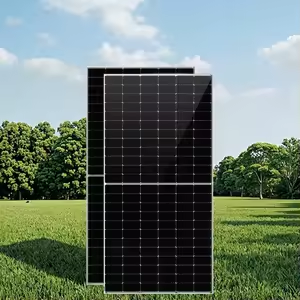
- Bifacial: These capture sunlight from both sides. They are ideal for ground-mount systems with high-albedo surfaces (like white gravel or concrete) but provide little value on standard residential rooftops.
Match the panel to the project. If you are doing a ground-mount system in an open field, bifacial is a great option. For a standard roof, stick to high-efficiency monocrystalline.
What To Confirm Before Ordering Pallets Of Solar Panels
Before you send payment, verify these four critical items:
- Certifications: Does the panel have UL (Underwriters Laboratories) or IEC certification? Without these, many local building inspectors will refuse to approve your project.
- Warranty Terms: Is the warranty transferable to the homeowner?
- Freight Insurance: Does the quote include shipping insurance that covers “concealed damage”?
- Batch Consistency: If you are buying multiple pallets, are they all from the same manufacturing batch? Mixing batches can sometimes result in slightly different voltage outputs, which complicates string design.
Selling Point: Use our easy quote request form to get a transparent, itemized pallet order breakdown — our team handles the details so you can focus on your installation.
How Does Palletized Shipping Work For Solar Panel Orders?
Solar panels are fragile, despite their tempered glass. During transit, vibration is the enemy. Professional freight carriers will keep the pallet upright and use corner protectors to prevent edge damage.
Most orders utilize LTL freight. Your pallet will be wrapped in plastic and secured to a standard 48×40 inch shipping pallet. The carrier will use a “dry van” trailer.
Upon delivery, follow the “15-minute rule.” Do not sign for the shipment until you have inspected the condition of the packaging. If you see crushing or holes, note it on the Bill of Lading (BOL) before the driver leaves. This is your only leverage if you need to file a damage claim later.
Are Pallet Solar Panels Insured During Shipping?
Standard freight insurance is often limited. Carriers limit their liability based on the weight of the item, not the value. A pallet of high-end solar panels might be worth $5,000, but a carrier might only be liable for $0.50 per pound if damaged, which would not cover your loss.
Always ask your supplier if they carry “Full Value Coverage” or if you should purchase supplemental insurance. If the supplier handles the logistics, ensure they provide proof that the shipment is insured for the full invoice value.
How To Request A Quote For 20 Pallets Of High-Efficiency Solar Panels
For large orders, you need a professional Request for Quote (RFQ). Do not just ask for “price.” Include:
- Project Location: Delivery zip code and type (commercial/residential).
- Quantity: Total number of panels or pallets.
- Preferred Wattage: e.g., “400W-425W modules.”
- Preferences: Do you need all-black modules for aesthetics? Do you require a specific brand?
- Deadline: When do you need the panels on-site?
Legitimate wholesale quotes will provide a line item for the product, shipping, insurance, and any applicable taxes or tariffs. If a quote is just a single number, ask for a breakdown.
Frequently Asked Questions About Wholesale Solar Panels By The Pallet
What Are Wholesale Solar Panels By The Pallet And How Do They Work?
Wholesale solar panels by the pallet refer to the practice of purchasing solar modules in bulk, where the panels are stacked, strapped, and shipped as a single logistics unit. This method is used by industry professionals to lower costs and simplify the supply chain compared to buying panels individually or in small quantities.
Why Buy Solar Panels By The Pallet Instead Of Individual Units?
Buying by the pallet provides significant economies of scale, leading to a lower price per watt. It also reduces shipping costs, decreases the risk of damage during transit, and ensures consistent inventory, which is crucial for maintaining the timelines of ongoing professional solar installations.










Reviews
There are no reviews yet.