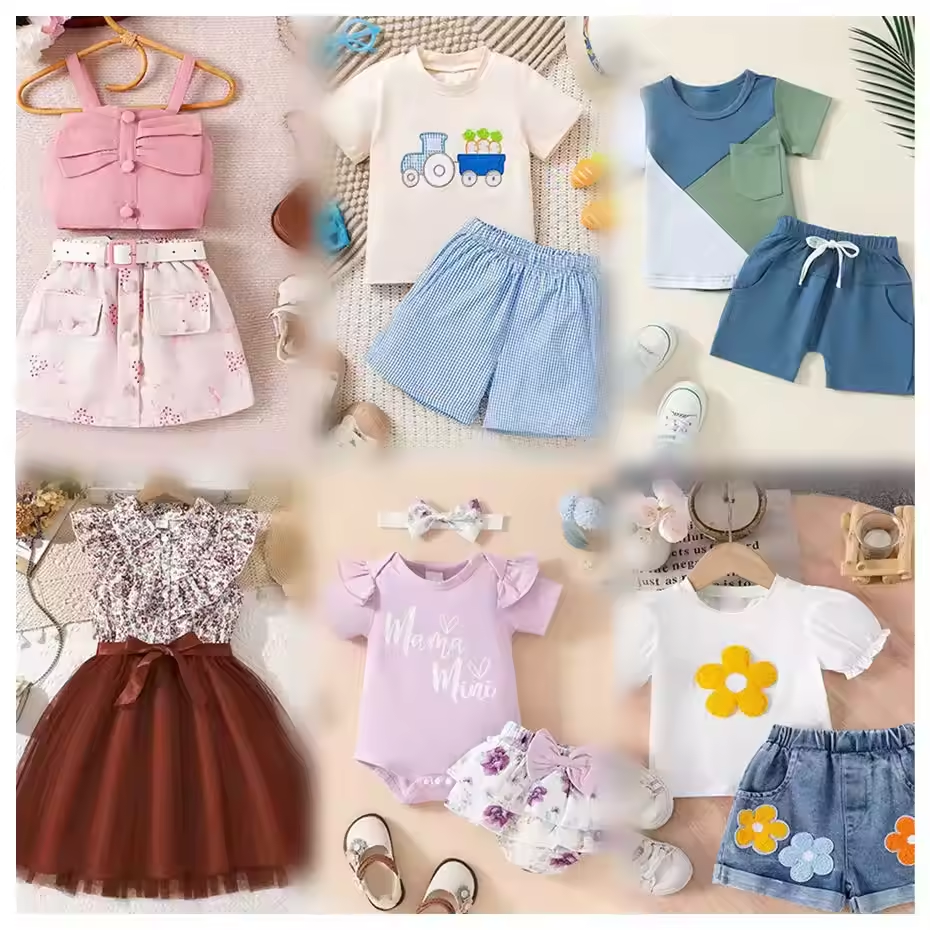
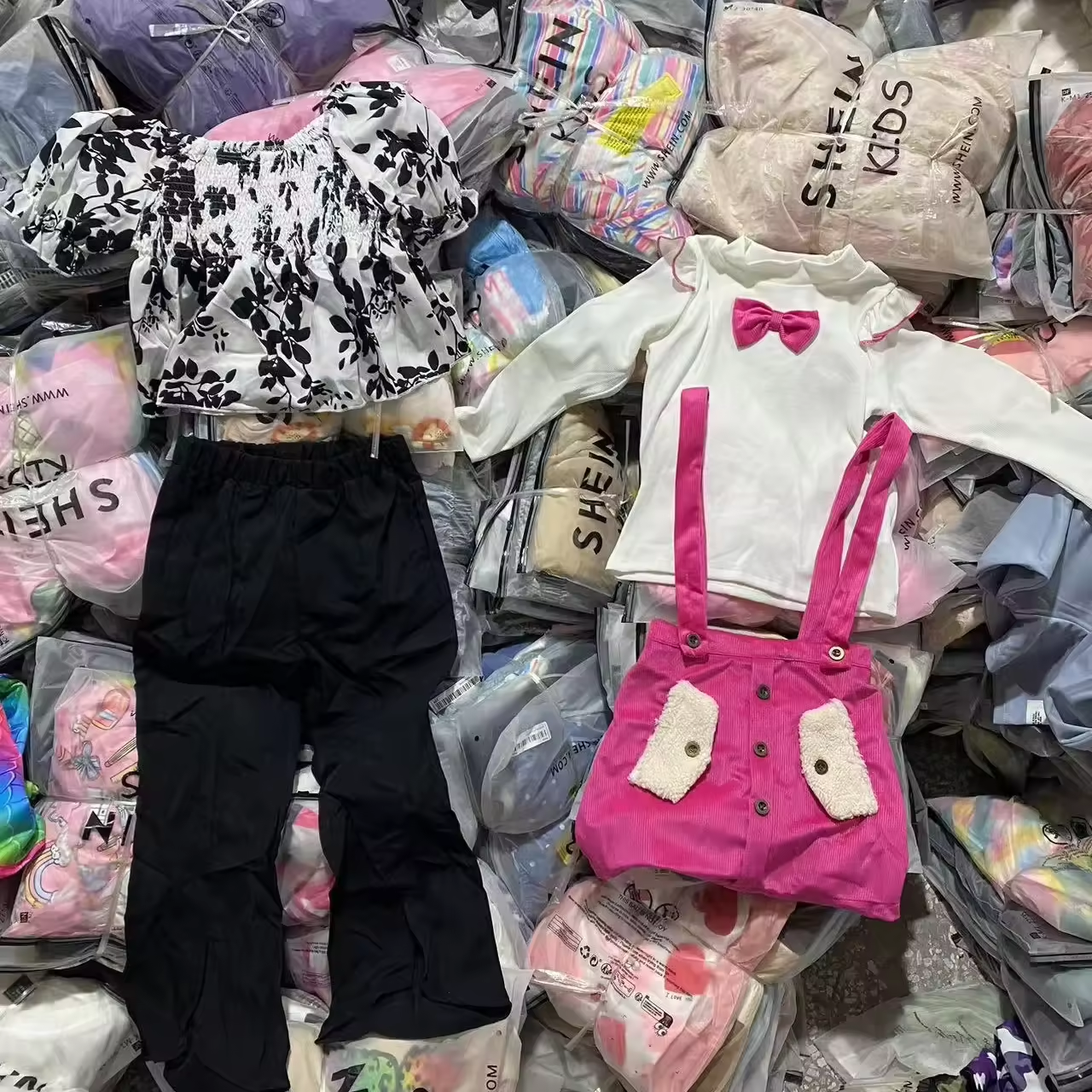
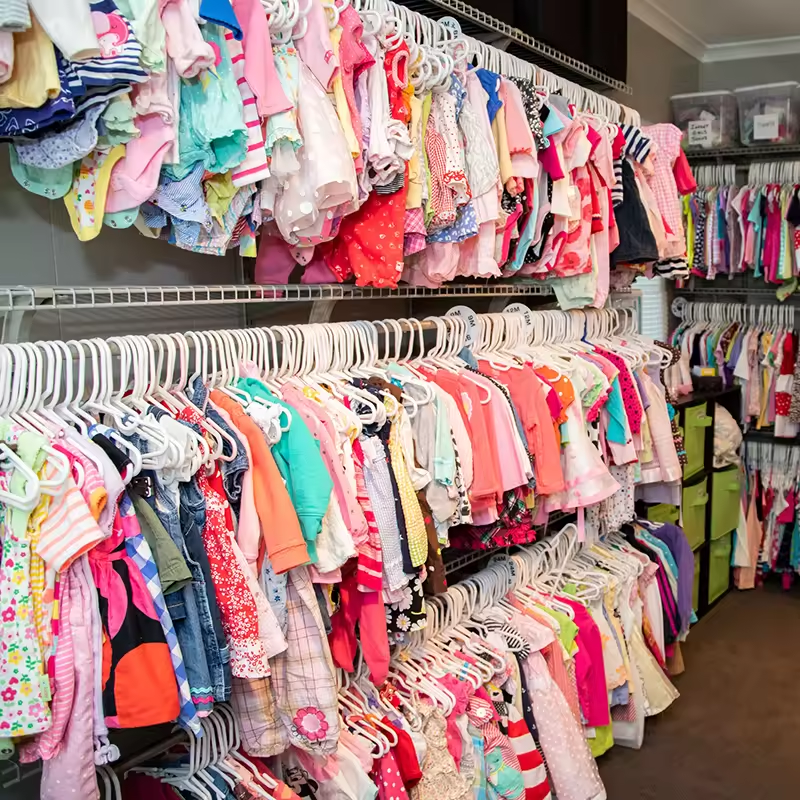
Kids Wholesale Clothing Fashion Sustainable Ethical Styles
Starting a children’s retail business requires more than just a passion for cute designs; it demands a strategic approach to sourcing. In this guide, we provide the blueprint for navigating the complex world of kids wholesale clothing. You will learn how to source inventory, understand profit margins, identify supplier red flags, and leverage modern AI tools to manage your stock efficiently.
Whether you are launching a boutique in the UK or scaling an existing online shop, this article covers the essentials. We move beyond basic tips to explore the integration of data-driven inventory and the shifting landscape of sustainable children’s fashion. By the end, you will have a clear roadmap to build a profitable and ethical brand.
Key Takeaways
- Wholesale purchasing requires a deep understanding of Minimum Order Quantities (MOQs) and supplier vetting.
- Sustainable materials such as organic cotton and bamboo are increasingly essential for modern brands.
- Spanish babywear offers a unique competitive advantage due to its focus on craftsmanship.
- AI-driven inventory management transforms how retailers predict demand and reduce overstock.
- Successful retailers must balance fast-fashion trends with slow-fashion ethical practices.
- Safety compliance and brand integrity are non-negotiable when dealing with children’s apparel.
- Effective sourcing involves a mix of trade shows, online directories, and direct relationships.
Kids Wholesale Clothing
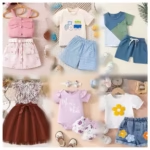
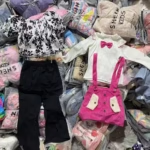
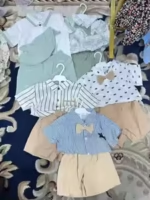
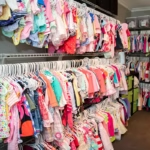
Kids wholesale clothing refers to the business-to-business (B2B) process where manufacturers or distributors sell bulk apparel to retailers at a discounted price. Unlike retail, where items are sold individually to end consumers, wholesale involves buying larger quantities to resell at a markup. This business model is the backbone of independent boutiques and online children’s clothing stores.
The fundamental difference lies in the price structure. Wholesale prices are significantly lower, allowing the retailer to cover overheads, marketing costs, and profit margins. Available categories are extensive, ranging from newborn layettes and toddler essentials to trendy outfits for older children. The wholesale model benefits small retailers by granting them access to a diverse inventory without the prohibitive costs of manufacturing from scratch.
| Feature | Wholesale | Retail |
|---|---|---|
| Buyer | Retailer / Business | End Consumer |
| Pricing | Bulk / Discounted | Full Market Price |
| Order Volume | High (MOQ) | Unit / Low |
| Primary Goal | Profit Margin | Personal Utility |
Where Do Small Boutiques Get Their Clothes From?
Small boutique owners rarely rely on a single source. A diversified strategy is crucial for survival in a competitive market. Most retailers combine several sourcing channels to ensure variety and reliability.
Common methods include attending trade shows where designers display their upcoming collections, allowing for tactile inspection of fabrics. Online wholesale directories are another popular route, offering a convenient way to compare suppliers. Additionally, many successful boutiques establish direct relationships with smaller independent labels. This helps balance the need for exclusivity—offering items customers cannot find on the high street—with the variety required to keep the product range fresh.
What Is the Minimum Order for Wholesale?
The Minimum Order Quantity (MOQ) is the lowest number of units a supplier is willing to sell in a single order. In the children’s clothing sector, MOQs can vary drastically. Some established luxury brands may require a high initial spend or specific unit counts, while newer independent wholesalers often offer lower barriers to entry.
Negotiating MOQs is possible, especially if you demonstrate a clear growth plan or a strong, established customer base. When approaching a supplier, be transparent about your business size and your marketing strategy. Some suppliers are willing to reduce MOQs for trial orders, especially if you have a proven track record. Always clarify whether the MOQ applies to the entire order value or specific product categories.
How Do I Start My Own Kids Clothing Brand?
Launching a children’s clothing brand is an exciting venture that blends creativity with rigorous business planning. Start by defining your niche—are you focusing on eco-friendly babywear, high-fashion kidswear, or durable play clothes?
Your roadmap should include:
- Market Research: Analyse competitors in your target region.
- Budget Planning: Allocate funds for inventory, website hosting, and marketing.
- Supplier Selection: Vetting manufacturers for quality and safety.
- Branding: Creating a distinct identity that resonates with parents.
Realistic startup budgets vary, but you should factor in not just the cost of goods, but also shipping, customs duties (if importing), and photography. Begin small to test demand, then reinvest your initial profits to expand your range.
How to Become a Children’s Clothing Distributor
Moving from a reseller to a distributor requires a more formal business structure. A distributor acts as the middleman between the manufacturer and the retailers. You will need to register as a legitimate business entity, establish legally binding supplier agreements, and manage complex logistics, including warehousing and distribution.
The key difference is volume and scope. A retailer sells directly to parents, while a distributor sells to other businesses. You must have the infrastructure to manage bulk shipments and a robust system for tracking stock levels.
Wholesale Baby Clothes: A Complete Guide for Retailers in the UK
The UK market for baby clothes is highly regulated and consumer-focused. When sourcing wholesale baby clothes, safety is the paramount concern. Products must adhere to strict UK safety standards, particularly concerning buttons, zips, and flame-retardant requirements.
Always request safety certificates from your suppliers. Fabric standards also matter; look for breathability and comfort. Sizing consistency is another major factor—parents often stick with brands that offer reliable sizing. By maintaining high standards, you build long-term trust, which is the most valuable asset for a babywear brand.
Why Spanish Babywear Wholesale Is a Must-Have for Your Boutique
Spanish babywear has earned a reputation in the UK for its exquisite design, attention to detail, and traditional craftsmanship. Many retailers find that stocking these items significantly elevates their brand image.
These garments often feature delicate embroidery, high-quality lace, and classic silhouettes that appeal to parents looking for heirloom-quality pieces. Because this aesthetic is distinct, it helps boutique owners differentiate themselves from mass-market retailers. Attracting premium customers often requires this level of design sophistication.
| Channel | Pros | Cons |
|---|---|---|
| Trade Shows | Tactile inspection | Travel costs |
| Online Directories | Convenience | Lower exclusivity |
| Direct Contact | Higher margins | Time-intensive |
| Wholesaler Platforms | Scalable | High competition |
Sustainable and Ethical Fashion in Wholesale Children’s Clothing
There is a growing shift among parents toward eco-friendly and ethically produced clothing. This is not just a trend; it is a fundamental change in buyer behaviour. Parents want to know that the clothes their children wear were produced under fair working conditions and with minimal environmental impact.
Key materials to look for in wholesale catalogues include organic cotton, which uses less water and fewer pesticides, and bamboo fabrics, which are known for their softness and sustainability. Responsible suppliers should have transparent supply chains, ensuring fair labour practices throughout the manufacturing process.
Trending Styles in Wholesale Children’s Clothing for Recent Times
The market is currently seeing a move away from hyper-branded clothing toward more minimalist designs. Gender-neutral colour palettes—think earth tones, sage greens, and muted creams—are highly popular.
Comfort is the primary driver for many purchasing decisions. Today’s parents are prioritising soft, stretchy materials that allow for movement. Influencer-driven fashion also plays a massive role. Retailers should keep an eye on social media trends, as a single viral post can spike demand for specific styles, such as ribbed loungewear or oversized silhouettes.
Fast Fashion vs. Slow Fashion in Junior Kids Wholesale
The debate between fast fashion and slow fashion is critical for any retailer. Fast fashion offers quick, cheap turnover of trends but carries significant environmental risks and lower quality standards. Conversely, slow fashion focuses on durability, ethical production, and timeless design.
| Metric | Fast Fashion | Slow Fashion |
|---|---|---|
| Turnover Rate | High | Low |
| Price Point | Lower | Premium |
| Durability | Lower | Higher |
| Ethics | Often Ambiguous | Transparent |
For boutique owners, the best approach is often a hybrid model. Use fast-fashion elements to capture fleeting trends, but ground your inventory in a core selection of slow-fashion staples. This satisfies both the urge for novelty and the customer’s need for long-lasting quality.
AI and Data-Driven Inventory Management in Kids Wholesale Clothing
Artificial Intelligence is revolutionising how retailers manage inventory. For small wholesalers and retailers, AI tools can predict which items will sell out, preventing both overstocking and missed opportunities.
Data-driven decision-making allows you to analyse past sales patterns, seasonal shifts, and even local social media trends to forecast demand accurately. Instead of guessing what to order, you can use automated restocking algorithms. This gives small retailers a massive advantage, allowing them to compete with larger, data-rich corporations by keeping their inventory lean and relevant.
How Long Does It Take to See Results from AI Search Optimisation for a Children’s Clothing Brand?
Retailers often ask about the timeline for seeing results when implementing AI search optimisation on their e-commerce sites. While there is no single answer, most businesses begin to see improved search relevance within 4 to 8 weeks.
The speed of results depends on factors such as the size of your catalogue, the quality of your existing product data, and how effectively the AI is integrated into your platform. It is important to note that AI requires high-quality data to learn. If your product descriptions are vague or lack detail, the AI will take longer to produce meaningful improvements.
AI for Personalised Shopping Experiences and Increased Conversions in Kids Clothing
AI-powered personalisation tools are transforming the digital shopping experience. Imagine a parent browsing your store and being presented with suggestions tailored to their child’s age, size, and previous purchase history.
Personalised product recommendations significantly increase conversion rates by reducing the time it takes to find the right item. Furthermore, size guidance tools can reduce returns, which is a major pain point for online retailers. Customer reviews are also vital—feeding these into your AI system helps the platform understand buyer sentiment, ultimately improving search relevance and building buyer confidence.
Ensuring Brand Safety and Compliance with AI in Children’s Retail
Using AI in children’s retail comes with a unique set of challenges, particularly regarding compliance and brand safety. You must ensure that any AI-generated marketing content or product descriptions adhere to advertising standards and are appropriate for a family audience.
It is critical to regularly audit AI outputs. Never automate the publication of content without a human check. Your brand voice should remain consistent, and you must ensure that all claims—such as safety certifications—are verified and not hallucinated by the AI. Trust is hard-won and easily lost in the parent community.
The Future of Wholesale Children’s Clothing Distribution
The wholesale landscape is evolving rapidly. Traditional trade-show-based distribution is being disrupted by on-demand production and dropshipping models. Subscription-based wholesale is also gaining traction, allowing retailers to receive recurring inventory updates based on seasonal demand.
Digital transformation in B2B e-commerce platforms is making it easier than ever for small retailers to connect with global manufacturers. The future looks increasingly digital, with platforms integrating directly into retail POS systems. Retailers who embrace these technological shifts while maintaining a human-centric approach to curation and service will likely thrive.
| Trend | Impact on Retailer |
|---|---|
| On-Demand Production | Reduces wastage / inventory risk |
| Dropshipping Models | Lower startup costs / logistical ease |
| B2B E-commerce | Faster sourcing / real-time tracking |
| Subscription Wholesale | Automated seasonal stock flow |
Frequently Asked Questions About Kids Wholesale Clothing
What Is Kids Wholesale Clothing And How Does It Work For Retailers?
Kids wholesale clothing is the bulk purchase of children’s apparel by retailers directly from brands or distributors. Retailers buy items in larger quantities at wholesale prices, then sell them individually to consumers at a retail markup. This model provides the necessary margins for a profitable business, provided that inventory is managed well.
Is Selling Kids Clothes Profitable In Today’s Market?
Yes, it is profitable, but it requires careful niche selection and efficient inventory management. The market is competitive, but demand for high-quality, sustainable, and stylish children’s wear remains high. Success typically depends on your ability to source unique products that solve a specific problem—such as durability, specific styling, or eco-conscious manufacturing—and your skill in leveraging modern digital tools to reduce overheads.









Reviews
There are no reviews yet.