
Solar Panels By The Pallet: Wholesale Buying Guide
If you are pricing a full system, buying solar panels by the pallet can be the difference between a workable budget and a stalled project. The catch is that pallet buying is not the same as ordering two or three panels online. You are now managing freight delivery, batch consistency, certifications, and warranty terms, all at once.
This guide walks you through what a pallet is, what it typically includes, how to compare quotes across suppliers, and when used pallets are a smart compromise (and when they are a headache).
Key Takeaways
- A solar panel pallet is a manufacturer packaged unit designed for freight shipping, usually containing a full “stack” of identical modules.
- Panels per pallet varies by model and packaging, so always confirm the exact count on the quote and packing list.
- Freight logistics matter: plan unloading equipment, delivery access, and damage inspection before the truck arrives.
- Compare quotes using total delivered cost, certifications (UL/CEC), warranty terms, and lead time, not just panel price.
- Monofacial vs bifacial is a site decision: bifacial can win on ground mounts with good rear-side exposure.
- Used pallets can work for off-grid and non-critical projects, but you need test data and a strict inspection process.
- Supplier trust signals include clear return policies, documented certifications, and verifiable business history.
- Do not assume “bulk” automatically means “best deal.” Sometimes a partial pallet or mixed order is the better fit.
Solar Panels By The Pallet
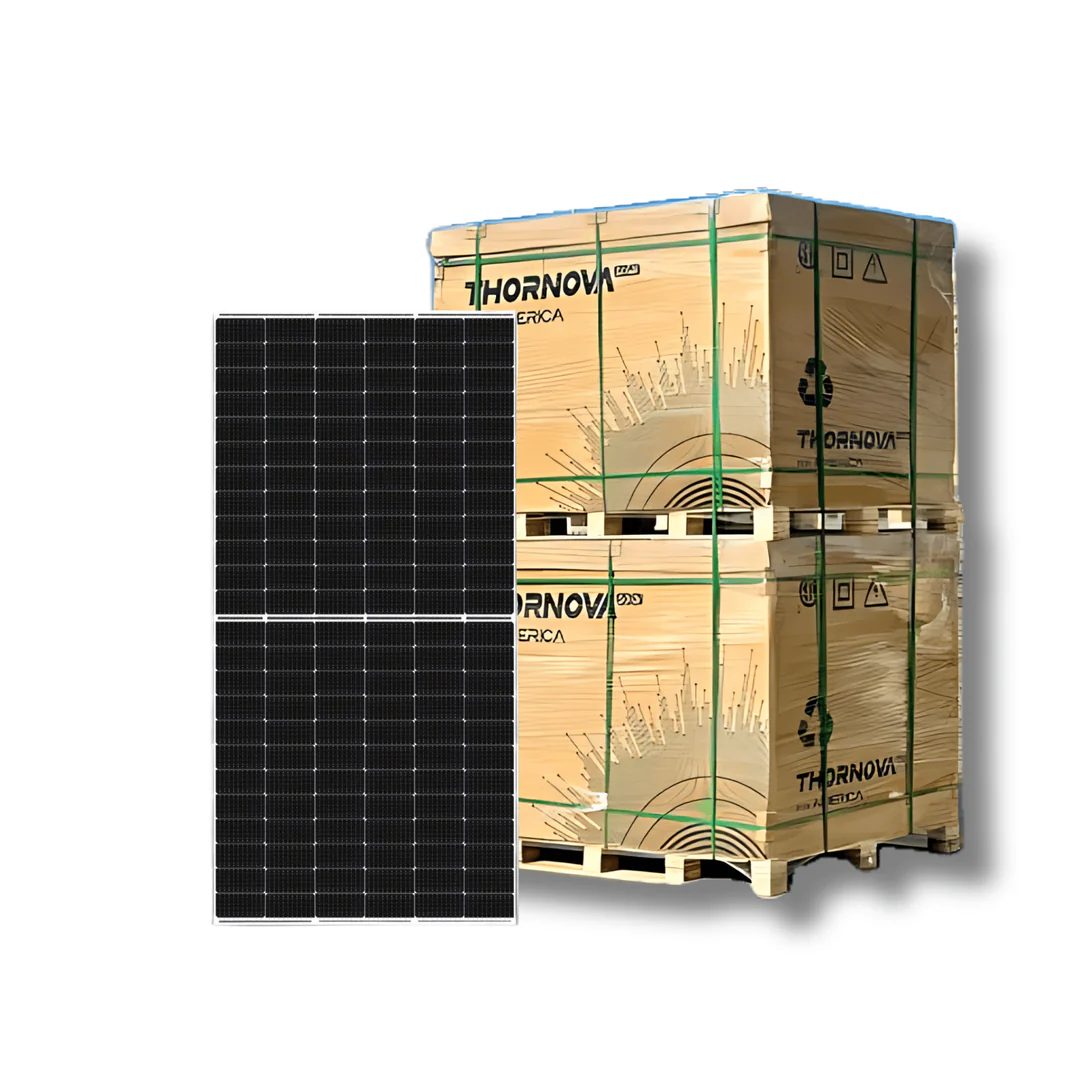
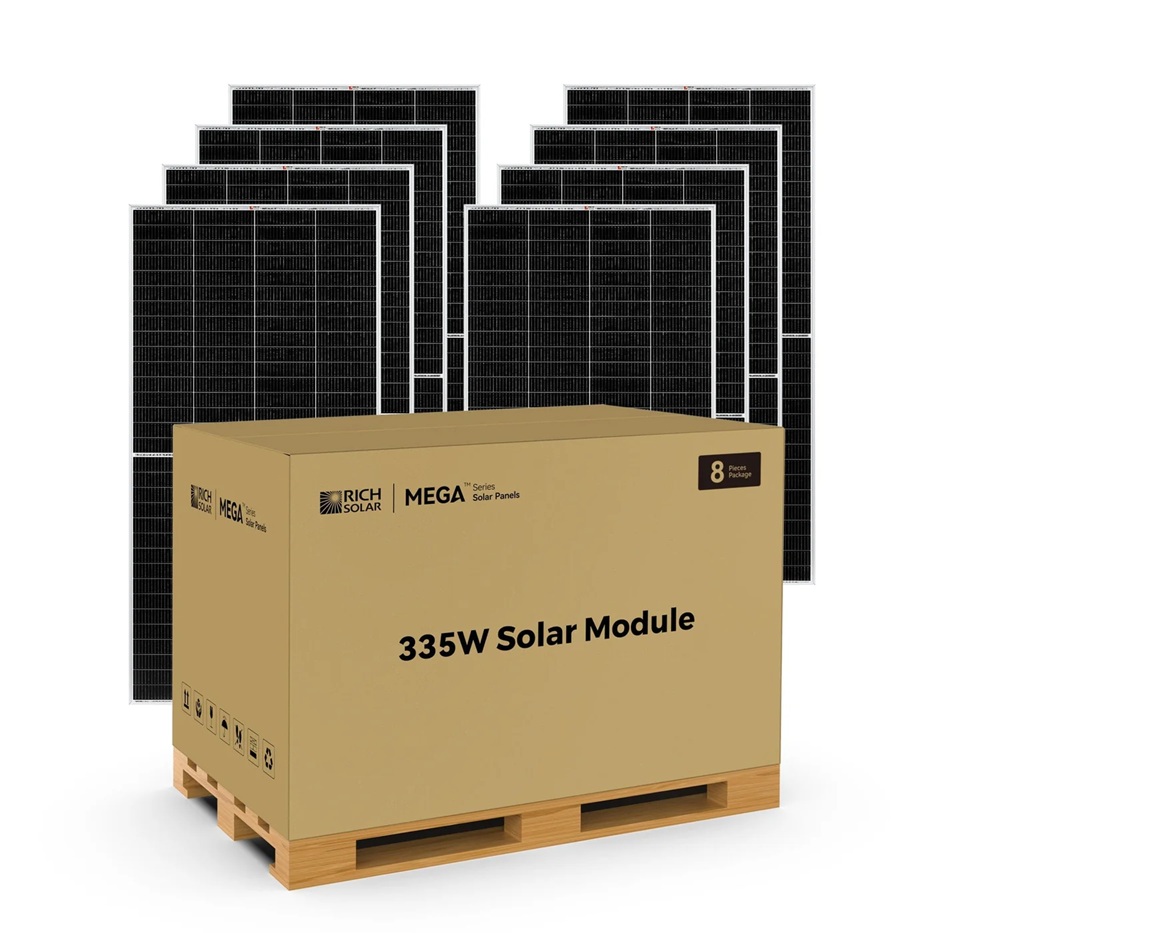
A “solar panel pallet” is a freight-ready package of solar modules stacked, banded, and protected for shipping and warehouse handling. Instead of buying single panels one at a time, you buy the manufacturer’s (or distributor’s) bulk unit, often aligned to how installers and EPCs procure inventory.
Buying by the pallet is popular with contractors and large property owners because it simplifies procurement. One order can cover most or all of a project, with fewer shipments and fewer chances of getting mismatched panels.
Here’s the thing: pallet purchasing is also a logistics purchase. You are not just buying modules. You are buying delivery terms, packaging quality, and supplier accountability.
Common Buyers Of Pallet Quantities
- Installers who need consistent modules across a job
- Commercial facilities teams handling multi-roof or multi-building installs
- Off-grid buyers building higher-capacity battery systems
- Developers doing repeatable “standard” system designs across properties
What Is A Standard Pallet Of Solar Panels And How Many Panels Does It Include?
A standard pallet of solar panels is typically a single SKU and single wattage, stacked to a safe shipping height and weight. Most pallets contain roughly 26 to 36 panels, but the exact number depends on the manufacturer, module dimensions, and packaging design.
Panel size and frame thickness affect how many units can be safely stacked. Higher-wattage modules can be physically larger, which may reduce the count per pallet even when the pallet footprint stays similar.
Pallets also commonly contain panels from the same production batch. That matters because batch consistency helps keep electrical characteristics closer, which can make string design and performance balancing easier on larger installs.
What To Look For On The Supplier Quote Or Spec Packet
- Exact panels-per-pallet count (not “typical”)
- Model number and nameplate wattage
- Module dimensions and weight
- Container or pallet packaging notes (corner guards, slip sheets, crate vs banded stack)
- Batch or serial range information (if provided)
How Much Does A Pallet Of Solar Panels Weigh And What Are The Shipping Requirements?
Most solar panel pallets land in a “freight weight” category that can be over 1,000 pounds once you include packaging. Some suppliers cite ranges like about 1,200 to 1,300 pounds, but this varies by module weight, count per pallet, and packaging. Confirm the exact weight on the freight documents.
Shipping is usually via LTL (less-than-truckload) freight for one or a few pallets, or full truckload for larger orders. Residential delivery often adds accessorial fees.
Plan For Receiving Before You Buy
- Unloading equipment: forklift is ideal; a pallet jack may work on smooth surfaces for lighter pallets, but many driveways are not suitable.
- Delivery access: confirm truck size, turning radius, and whether a liftgate is available if you do not have a dock.
- Damage inspection: you must inspect packaging at delivery and note damage on the bill of lading, or claims can get harder.
Buyer Beware: Freight Surprises
- Liftgate, appointment windows, limited-access locations, and re-delivery fees can materially change your “delivered” price. Ask for a freight quote that lists accessorials in writing.
What Is The Price Range For A Solar Panel Pallet And What Affects The Cost?
It depends. Pallet pricing is driven by a handful of variables: module wattage, panel type (monofacial vs bifacial), brand positioning, current supply, and certification status (especially if you need UL and CEC compliance for U.S. permitting).
Many buyers evaluate deals using cost per watt ($/W). In practice, pallet buying often lowers $/W versus ordering a few modules, but the real comparison should use delivered $/W (panel price plus freight, packaging, and any fees).
What Moves The Price The Most
- Higher efficiency and premium warranties usually cost more
- Bifacial modules can cost more, but can produce more in the right install
- “Clearance” or surplus lots can be cheaper but may have tighter return terms
- Certification and documentation quality affects permitting confidence
Request quotes from at least two suppliers and ask them to itemize freight separately so you can compare apples to apples.
What Are The Key Benefits Of Buying Wholesale Solar Panels By The Pallet?
The main benefits are financial and operational. You typically reduce the cost per watt, reduce shipping cost per module, and reduce the time spent sourcing panels across multiple orders.
Benefits That Show Up On Real Projects
- Lower per-panel and per-watt pricing: bulk pricing structures often reward full pallets.
- Simpler inventory management: fewer deliveries, fewer serial ranges, fewer “oops we ordered the wrong model” moments.
- Better project planning: you can design around a known, consistent module for the whole job.
So what does this look like in practice? Installers often prefer pallet buys because they can schedule labor and racking around a single delivery, rather than waiting on multiple parcel shipments.
How Do Monocrystalline And Bifacial Solar Panels Compare When Buying In Bulk?
Monocrystalline (often PERC or newer cell designs) is the common default for rooftop installs because it delivers strong efficiency in a standard, proven format. Bifacial modules can produce power from the front and also from reflected light hitting the rear side, which can increase total energy in the right conditions.
Direct answer: Bifacial is often worth the premium for ground mounts with bright surfaces and good rear exposure. For many rooftops, monofacial monocrystalline is usually the simpler value pick.
Bulk Buying Comparison Table: Monofacial Vs Bifacial
| Factor | Monofacial Monocrystalline | Bifacial | Best Fit |
|---|---|---|---|
| Where It Wins | Standard rooftops, tight budgets | Ground mounts, carports, high albedo surfaces | Match to site conditions |
| Installation Notes | Works with most racking | Needs rear clearance and smart design | Ground-mount friendly |
| Risk Factors | Fewer “gotchas” | Underperforms if rear side is shaded | Site assessment matters |
| Buying By The Pallet | Widely available | Availability varies by supplier | Confirm lead times |
Which Solar Panel Brands Offer The Best Value When Purchasing By The Pallet?
“Best value” depends on what you value: warranty strength, U.S. support, documented certifications, bankability, or simply lowest delivered $/W. Common brands you may see in pallet quantities include JA Solar, Jinko, SunGold Power, REC, Silfab, and Meyer Burger.
Rather than ranking brands, use a repeatable evaluation method:
How To Evaluate A Brand For Pallet Purchases
- Verify certifications needed for your project (UL 61730; CEC listing if required for your jurisdiction)
- Compare product warranty length vs performance warranty length (and the conditions)
- Check who handles warranty claims in your region (manufacturer vs distributor)
- Confirm datasheets match the exact model number on the quote
Are Wholesale Solar Panels By The Pallet Suitable For Both Residential And Commercial Use?
Yes. Pallet buying can fit residential or commercial projects as long as your system size is large enough to use most of the pallet and your site can receive freight.
For residential, pallet buys are common for:
- Off-grid homes with higher daily loads
- Large roofs (barns, workshops, guest houses)
- Multi-building properties wanting a consistent module across arrays
For commercial, pallet buys are a natural fit because projects are often designed around bulk procurement from the start.
Common Misconception: “Pallet buying is only for solar farms.”
Reality: many 10 kW to 20 kW installs can consume most of a pallet, depending on panel wattage and pallet count.
What System Size Do You Need To Justify Buying A Full Pallet Of Solar Panels?
It depends on (1) how many kW you need, (2) the wattage of the module you are buying, and (3) how many modules come on the pallet.
Direct answer: If your planned system needs roughly “most of a pallet” of modules, pallet buying usually becomes worth comparing, especially when freight per panel drops.
A simple sizing shortcut:
- Estimate your target system size in kW (often driven by annual kWh usage and roof or ground space).
- Convert kW to number of panels:
- Number of panels ≈ (System kW x 1,000) / Panel watts
- Compare that count to the pallet quantity.
Example (Illustrative, Not A Quote)
- 10 kW system with 400 W panels: about 25 panels
- 20 kW system with 400 W panels: about 50 panels
If your pallet is 30 panels, a 10 kW system might be close to a full pallet. A 20 kW system could be two pallets, or one pallet plus a partial order.
Quick Fit Table: When A Pallet Purchase Makes Sense
| Your Situation | Pallet Buy Likely Makes Sense? | Why | What To Do Next |
|---|---|---|---|
| One standard home rooftop system | Sometimes | May not use the full pallet | Compare pallet vs partial with delivered freight |
| Large home, multi-building, off-grid | Often | Higher panel count, fewer shipments | Verify receiving logistics and storage |
| Commercial rooftop | Often | Procurement efficiency | Request itemized quote and lead time |
| Ground mount / small solar farm | Usually | Bifacial options, bulk logistics | Model site conditions for bifacial gains |
What Warranties And Certifications Should You Look For In Bulk Solar Panel Deals?
Start with two warranty types:
- Product warranty covers defects in materials and workmanship (often around 10 to 15 years, but it varies by brand and model).
- Performance warranty covers power output over time (often 25 to 30 years, varies by brand and model).
Direct answer: Look for clear warranty documents tied to the exact model number, plus the certifications your AHJ (authority having jurisdiction) and utility require.
For U.S. projects, two items come up constantly:
- UL 61730: a key safety standard for PV modules.
- CEC listing: often required for certain incentive programs or for equipment eligibility in California, and it is a strong procurement signal elsewhere too.
What To Look For Checklist
- Datasheet and warranty PDFs provided before you pay
- Module label photos showing model number and electrical ratings
- Statement of certifications (and the listing reference)
- Clear process for DOA (dead on arrival) or shipping damage claims
- Clarity on who honors warranty claims if the supplier disappears
Buyer Beware: Imported Or Gray-Market Inventory
Even if a module is legitimate, warranty claims can get complicated if the product was not sold through authorized channels. Ask the supplier, in writing, how warranty support works for your region.
Where Can You Buy Wholesale Solar Panels And What Makes A Supplier Trustworthy?
You can buy pallet quantities from:
- Dedicated solar wholesalers and distributors
- Manufacturer-direct programs (more common at larger volumes)
- Online platforms that aggregate distributor inventory
- Liquidation and surplus sellers (higher risk, sometimes good deals)
Trustworthiness is less about a flashy website and more about documentation and accountability.
Trust Signals
- Clear business identity (address, phone, support contact)
- Transparent return and damage policy
- Provides spec sheets, warranty terms, and certification references upfront
- Reviews you can verify outside their own website
- Willingness to itemize freight and fees
Red Flags
- Vague phrases like “tier 1 panel” with no model number
- No UL/CEC documentation when you need it
- Pressure to pay immediately with no written quote
- “No returns” with no DOA exception
How Can You Compare Solar Panel Pallet Pricing Across Multiple Wholesale Suppliers?
Use a structured quote comparison so you do not get tricked by a low panel price and high freight, or a cheap pallet with weak warranty backing.
Direct answer: Compare total delivered cost, delivered $/W, certifications, warranty support, and lead time, using the same assumptions for every supplier.
Quote Comparison Table: What To Ask For (No Guesswork)
| Quote Item | What To Request | Why It Matters | Common Pitfall |
|---|---|---|---|
| Panel Line Item | Model, wattage, qty, unit price | Confirms exact product | “Equivalent model” swaps |
| Freight | Carrier, accessorials, delivery type | Determines delivered $/W | Hidden liftgate or rural fees |
| Certifications | UL, CEC docs for that model | Impacts permitting | Generic certification claims |
| Warranty Support | Who processes claims and how | Reduces long-term risk | Manufacturer-only with no channel support |
What Are Used Solar Panels By The Pallet And Are They Worth Buying?
Used (or refurbished) solar panel pallets are bulk lots of modules that were previously installed or were pulled from projects. They can come from decommissioned arrays, insurance write-offs, surplus inventory, or project overbuys.
Direct answer: Used pallets can be worth it for off-grid, backup, or budget builds if you can verify condition and accept lower certainty on warranty. They are usually a poor choice for permit-heavy, inspection-heavy grid-tie projects unless documentation is excellent.
Tradeoffs To Accept Upfront
- More variability in condition and power output
- Limited or no manufacturer warranty remaining
- Potential cosmetic damage that may not affect output, but can affect longevity
- Higher effort for testing, matching, and sorting modules
When Used Pallets Make Sense
- DIY off-grid systems where you can oversize the array
- Non-critical loads (sheds, barns, seasonal cabins)
- Buyers with access to testing tools and time to sort panels
How Do You Inspect And Evaluate A Pallet Of Used Solar Panels Before Purchase?
You should treat used pallets like buying a used vehicle fleet. The price can be good, but only if you verify condition.
Direct answer: Require test documentation (flash test if available), inspect for physical damage, and confirm electrical readings on a sample before accepting the full pallet.
Inspection Steps
- Visual inspection: glass cracks, hotspots/browning, delamination, corrosion, damaged backsheets.
- Frame and mounting points: bends, pulled threads, damaged grounding points.
- Junction box and connectors: look for cracks, broken clips, or non-matching connector types.
- Electrical spot checks: measure open-circuit voltage (Voc) and short-circuit current (Isc) on a few panels under similar sunlight conditions. Compare to expected ranges from the original datasheet, accounting for temperature and irradiance.
Higher-Confidence Documentation To Request
- Electroluminescence (EL) imaging results (better at revealing microcracks)
- Flash test data for each module or at least representative sampling
- Original spec sheets and serial lists
- Any transferability statement for remaining warranty (often limited)
Buyer Beware: Mixed Lots
Mixed wattages or mixed electrical characteristics can complicate string design and reduce performance. If you cannot confirm uniformity, plan for more MPPT inputs or separate strings.
What Are The Best Practices For Handling, Storing, And Installing Solar Panel Pallets?
Receiving and staging is where many bulk buys go wrong. A cracked module corner can be invisible until the panel is under load or fails inspection.
Safe Handling Basics
- Use forklifts with proper fork spacing and a spotter
- Do not clamp or lift by the frame edge
- Keep pallets upright and level during moves
- Do not remove protective corner guards until you are ready to stage panels
Storage Best Practices
- Store under cover, off bare ground
- Avoid stacking pallets unless the manufacturer packaging allows it
- Keep straps and corner protectors in place to prevent shifting
- Protect from standing water and high-wind exposure
But that’s not all. Document everything during receiving. Take photos of pallet condition, labels, and any visible damage before you sign acceptance.
What To Look For: Receiving Checklist
- Packaging intact (bands, corner guards, no crushed edges)
- Pallet label matches your model and quantity
- No water intrusion or torn wrap
- Serial numbers recorded (or at least pallet ID recorded)
- Damage noted on delivery paperwork if present
Frequently Asked Questions About Solar Panels By The Pallet
What Are Solar Panels By The Pallet And How Do They Work?
Solar panels by the pallet are bulk quantities of the same solar module packaged together for freight shipping and warehouse handling. You buy a full pallet (or multiple pallets) instead of individual modules, which can lower delivered cost per watt and simplify procurement. You still need to match the modules to your system design and confirm certifications for permitting.
What Are The Key Benefits Of Buying Wholesale Solar Panels By The Pallet?
The biggest benefits are usually lower delivered $/W, fewer shipments, and better module consistency across a project. Pallet buys also reduce ordering time for installers and help keep a job moving once racking and labor are scheduled. The key is to compare total delivered cost, not just panel price.












Reviews
There are no reviews yet.