

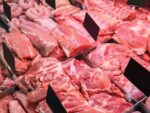

Wholesale Meat: Is It Cheaper to Buy Wholesale Meat Near You
Families and restaurant owners face the same frustration every month: rising grocery bills and unpredictable meat prices at retail stores. You watch premium cuts disappear from your budget, replaced by cheaper alternatives or smaller portions. Meanwhile, wholesale meat suppliers serve restaurants and institutions with the same high-quality beef, pork, and specialty cuts at a fraction of retail cost—but most home buyers never access these channels because the process feels unfamiliar or overly complicated.
This guide explains exactly how wholesale meat purchasing works, whether it genuinely saves money compared to grocery store shopping, and how to find reliable wholesale meat distributors and suppliers who will work with families and small businesses. You will learn what to buy, how to store it, and when bulk purchasing makes sense for your household or operation.
Key Takeaways
- Wholesale meat purchasing reduces cost per pound by eliminating retail markups, but requires upfront investment and adequate freezer storage to realize savings.
- Families buying a quarter or half cow can save 20-40% compared to grocery store pricing on equivalent cuts, depending on volume and supplier.
- Reliable wholesale meat distributors are vetted through certifications (USDA inspection, food safety compliance), transparent sourcing practices, and verifiable customer references.
- Bulk beef, pork, and specialty meats require different storage protocols; vacuum sealing and proper freezer organization extend shelf life and preserve quality.
- Restaurant buyers benefit from establishing direct supplier relationships for consistent weekly deliveries, cut customization, and invoicing flexibility.
- Not all cheap bulk meat represents good value; pricing reflects factors like feed quality, processing standards, and cut grade—buyers must assess tradeoffs.
- Wholesale channels provide access to premium cuts at prices traditionally associated with budget options, when purchased in volume.
Wholesale Meat
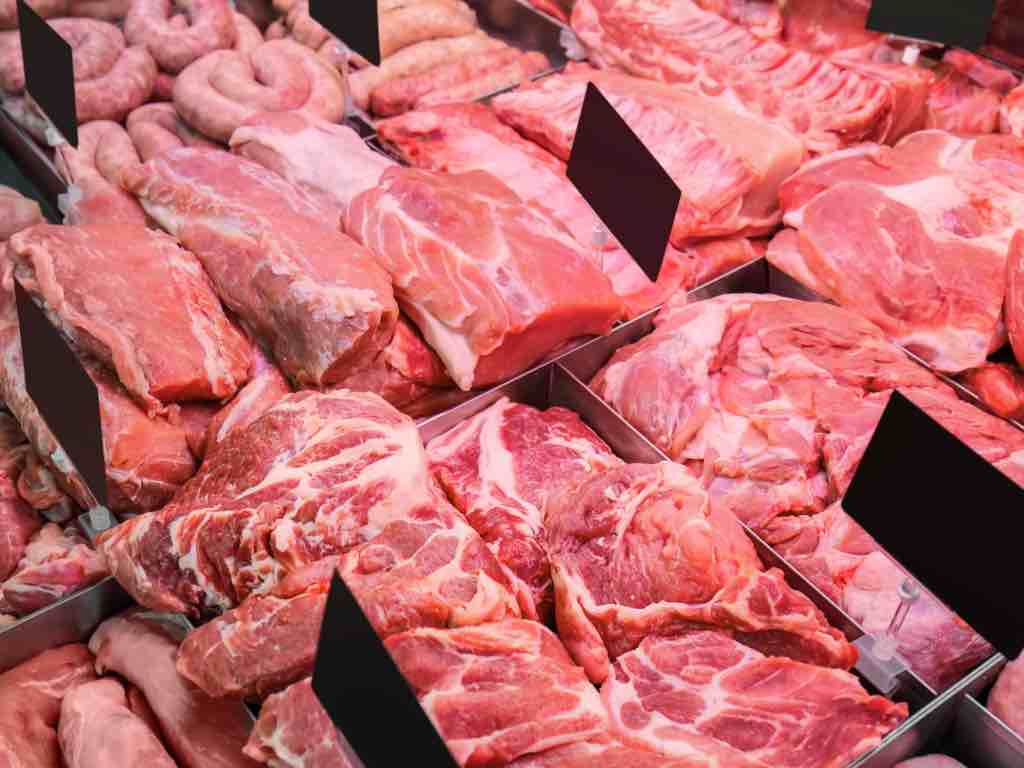
Wholesale meat refers to protein products sold in bulk quantities directly from distributors, processors, or suppliers to end buyers, bypassing traditional retail grocery channels. Unlike pre-packaged, individually priced cuts displayed in supermarket coolers, wholesale meat is typically sold by the case, primal cut, or whole/half animal. This purchasing model is designed for high-volume buyers—restaurants, caterers, institutions—but is increasingly accessible to families and small businesses willing to commit to larger minimum orders in exchange for significantly lower per-pound pricing.
Here’s the thing: The term “wholesale” does not automatically mean lower quality. It refers to the position in the supply chain, not the grade of the product. A wholesale ribeye and a retail ribeye can come from the same processor and carry identical USDA grading; the difference lies in packaging, distribution, and the buyer’s willingness to purchase in bulk.
Wholesale meat buyers generally fall into three categories. Restaurants and food service operations require consistent, large-volume deliveries to maintain menu stability and control food costs. Small businesses—butcher shops, specialty grocers, meal prep services—source wholesale to resell or incorporate into prepared products. Families and individual buyers increasingly turn to wholesale channels to reduce monthly grocery expenses, often purchasing a quarter cow, bulk pork bundles, or case quantities of chicken.
The purchasing process typically involves contacting a wholesale meat distributor to request a price list or quote, selecting specific cuts or bundles based on volume minimums, arranging payment and delivery or pickup, and ensuring adequate cold storage is available upon receipt. Many wholesalers require a minimum order—commonly $200 to $500 for family buyers, higher for commercial accounts.
Is It Cheaper to Buy Wholesale Meat?
Yes, wholesale meat is typically cheaper per pound than grocery store pricing—but only if you buy in sufficient volume and have the storage capacity to use it before quality degrades.
Cost savings stem from eliminating retail markups. Grocery stores purchase from distributors, then add 30-50% margins to cover overhead, shrinkage, and labor. When you buy directly from a wholesale meat supplier, you skip that markup. Grocery store ribeye might retail at $18-22 per pound, while the same cut purchased wholesale in a 10-pound case could cost $12-15 per pound. Ground beef that retails for $6-7 per pound often drops to $4-5 per pound when bought in 40-pound cases.
Several factors influence wholesale pricing. Cut type matters—premium steaks command higher wholesale prices than ground meat or stew cuts, though both still offer savings versus retail. Volume ordered directly affects per-pound cost; a half cow purchase yields better pricing than buying a single case of steaks. Supplier relationships can unlock better pricing over time, especially for restaurant buyers placing regular weekly orders.
A family purchasing a quarter cow (approximately 100-125 pounds of mixed cuts) might pay $600-800 total, or roughly $6-7 per pound for everything from ribeyes to ground beef. If that same family bought equivalent cuts retail—steaks, roasts, ground beef—the total cost would easily exceed $1,000. The savings are legitimate, but require an initial $600-800 outlay and 4-6 cubic feet of freezer space.
What Is a Meat Wholesaler and How Do They Operate?
A meat wholesaler sits between producers (farms, feedlots, processors) and end buyers (restaurants, retailers, families). Their role is to aggregate product from multiple sources, maintain cold storage and distribution infrastructure, and sell in bulk quantities that individual farms or small processors cannot efficiently handle.
Wholesalers source products through contracts with USDA-inspected slaughterhouses and processing plants. Pricing is typically structured as cost-per-pound based on cut type and grade, with volume discounts applied as order size increases. Some wholesalers also offer “hanging weight” pricing for whole or half animal purchases, where buyers pay based on the carcass weight before trimming and cutting.
How to Find Reliable Wholesale Meat Distributors and Suppliers
The difference between a trustworthy wholesale meat distributor and an unreliable one comes down to three pillars: verified certifications, transparent sourcing practices, and a documented track record with real customers.
Before committing to any supplier, verify they operate under USDA inspection or equivalent state certification. This is non-negotiable for food safety and legal compliance.
Use this checklist when vetting a new wholesale meat supplier:
- USDA or state certification: Request documentation proving the facility is inspected and compliant with federal or state food safety standards.
- Sourcing transparency: Ask where animals are raised, what feed programs are used, and whether the supplier works with specific farms or brokers.
- Return and refund policy: Understand what happens if product arrives damaged, thawed, or below expected quality.
- Customer references: Request contact information for 2-3 existing customers who have ordered regularly. Follow up with them.
- Lead times and delivery reliability: Ask how far in advance orders must be placed and what their on-time delivery rate looks like.
- Packaging and labeling standards: Verify that all products are vacuum-sealed or properly wrapped, labeled with cut type and date, and arrive fully frozen if ordered frozen.
When reaching out to a new meat wholesale distributor, ask these questions directly:
- “What are your minimum order requirements for family buyers versus commercial accounts?”
- “Can I visit your facility or see third-party inspection reports?”
- “What is your process if I receive a product that doesn’t meet expectations?”
- “Do you offer custom cutting, or are all products pre-portioned?”
Suppliers who respond quickly, provide detailed answers, and offer to walk you through the process are more likely to be reliable partners.
Wholesale Beef: Bulk Buying Guide for Families and Businesses
Wholesale beef is the most commonly purchased bulk meat category for both families and restaurants, driven by high retail pricing and the availability of diverse cuts that suit a range of cooking styles and budgets.
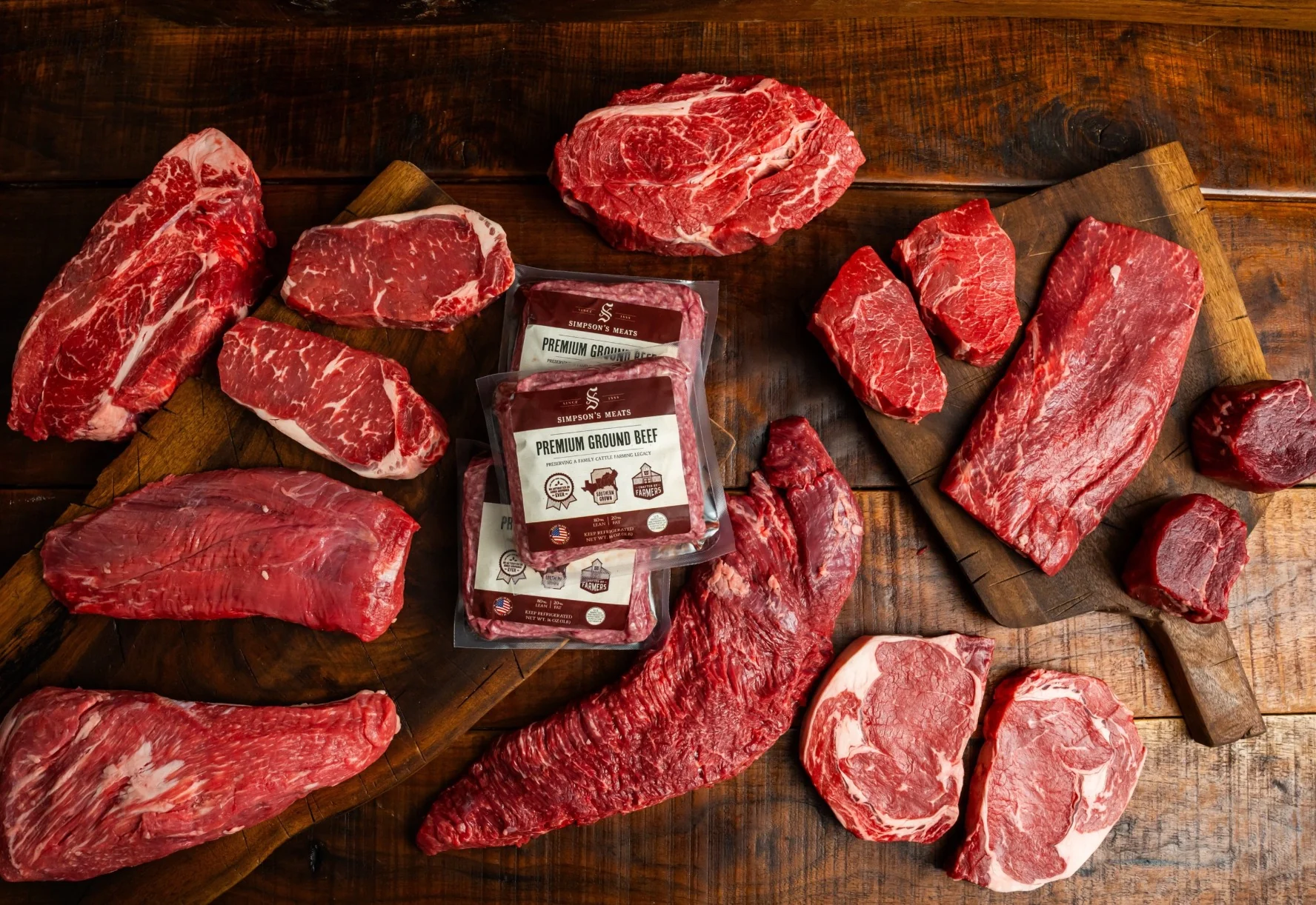
The most popular wholesale beef options include half cow and quarter cow bundles, which provide a complete mix of steaks, roasts, ground beef, and secondary cuts at the lowest per-pound cost. A quarter cow typically yields 100-125 pounds of packaged meat. Ground beef sold in 40-50 pound cases is a staple for restaurants and meal-prep-focused families. Bulk steaks—ribeye, strip, sirloin—are available in 10-15 pound cases, allowing buyers to access premium cuts at wholesale pricing without committing to an entire animal.
A quarter cow of USDA Choice beef typically costs $6-8 per pound hanging weight, resulting in a final packaged cost of roughly $7-9 per pound. Ground beef cases range from $4-6 per pound. Bulk ribeye or New York strip steaks purchased in cases generally cost $12-16 per pound wholesale, compared to $18-24 retail.
Storage requirements are the limiting factor for most family buyers. A quarter cow requires approximately 4-6 cubic feet of freezer space. Buyers without a dedicated chest freezer will struggle to accommodate wholesale beef purchases.
What Are the Best Cuts of Wholesale Steak to Buy in Bulk?
Ribeye is the most flavorful steak cut due to heavy marbling, making it a favorite for grilling. Wholesale ribeye typically costs $12-16 per pound in 10-15 pound cases, compared to $20-28 retail.
New York strip delivers a leaner profile than ribeye while maintaining tenderness and beefy flavor. Wholesale pricing ranges from $11-15 per pound. Strip steaks are popular with restaurants because they portion consistently.
Filet mignon (tenderloin) is the most tender cut but commands the highest wholesale price, typically $18-25 per pound even in bulk. Buyers seeking the best cost-per-quality ratio often skip filet in favor of ribeye or strip.
Sirloin is the budget-friendly steak option in wholesale purchasing, costing $8-12 per pound.
Which offers the best balance? Ribeye and New York strip provide the strongest combination of quality and wholesale value for most buyers.
Wholesale Pork: What Buyers Need to Know About Bulk Pork Purchasing
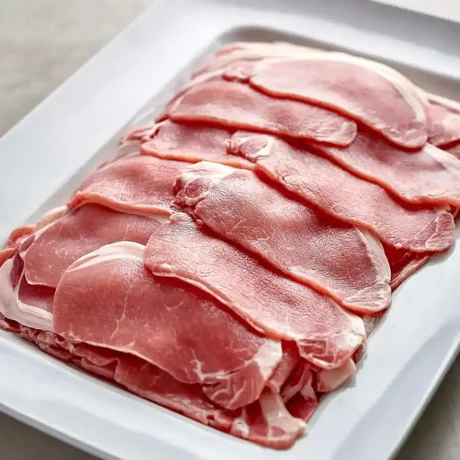
Wholesale pork offers even deeper cost savings than beef in many cases. The most common wholesale cuts include pork loins, sold as whole muscles or pre-sliced into chops, pork shoulders ideal for slow cooking and pulled pork, ribs, and pork belly.
Pork loins are the workhorse cut for both families and restaurants. A whole pork loin (8-12 pounds) costs $3-5 per pound wholesale, compared to $6-9 per pound for retail pork chops.
Pork shoulders deliver the lowest cost per pound, typically $2-4 per pound wholesale. They require long cooking times but yield tender, flavorful results.
Many wholesale pork suppliers will break down whole primals into specific portion sizes, saving buyers the labor and equipment costs. Always ask whether custom cutting is available.
Wholesale Meat for Restaurants: How to Source Quality Product at Scale
Restaurant buyers have specific needs: consistent weekly or bi-weekly deliveries, tight food cost margins, and the ability to customize portion sizes and cuts to match menu specifications.
The key to reliable wholesale meat sourcing for restaurants is establishing a direct relationship with a wholesale meat supplier rather than relying on broadline distributors. Dedicated meat suppliers offer better pricing, more flexible cutting services, and deeper product knowledge.
What restaurant owners should look for:
- Consistency: The ribeye delivered this week should match last week’s in grade, marbling, and portion size.
- Volume capacity: The supplier must be able to scale with the restaurant.
- Food safety compliance: Request proof of USDA inspection, HACCP certification, and temperature-controlled delivery protocols.
- Lead times: Understand how far in advance orders must be placed.
- Cut customization: Can the supplier provide 8-ounce ribeyes instead of 12-ounce?
- Invoicing and payment terms: Monthly invoicing and net-30 payment terms improve cash flow.
Restaurant buyers should request a trial order before committing to a long-term contract.
Why Is Some Bulk Meat So Cheap? Understanding Pricing in the Wholesale Market
Low pricing in the wholesale meat market is not inherently a red flag, but it demands scrutiny. Legitimate cost savings come from volume efficiencies, fewer middlemen, and lower-grade cuts. Suspiciously cheap meat often reflects compromised quality, questionable sourcing, or substandard processing.
Legitimate reasons wholesale and bulk meat costs less:
- No retail markup: Grocery stores add 30-50% margins. Wholesale eliminates that layer.
- Volume discounts: Processors offer lower per-pound pricing to buyers committing to large orders.
- Less expensive cuts: Ground beef, stew meat, and secondary cuts naturally cost less than ribeye or tenderloin.
- Direct sourcing: Buying from a supplier who works directly with farms removes distributor fees.
Red flags:
- Pricing significantly below market average: If wholesale ground beef is $2 per pound when the regional average is $4-5, investigate.
- Unwillingness to disclose sourcing: Suppliers who refuse to explain where animals are raised may be sourcing from low-quality facilities.
- No inspection documentation: Meat sold without USDA or equivalent state inspection is illegal and unsafe.
Low pricing is acceptable when it reflects volume efficiencies and direct sourcing. It is a warning sign when it reflects compromised quality. Always verify inspection status and sourcing practices.
What Is the Most Consumed Meat Globally and Why Does It Matter for Wholesale Buyers?
Pork is the most consumed meat globally, accounting for approximately 36% of total meat consumption worldwide, followed by poultry at roughly 35% and beef at 24%, according to data from the Food and Agriculture Organization of the United Nations.
Global demand trends directly influence wholesale meat pricing and product availability in local markets. High global demand for pork can tighten supply and raise wholesale prices domestically when export demand increases. Wholesale buyers benefit from understanding these trends because they can anticipate price fluctuations and adjust purchasing strategies accordingly.
Exotic and Specialty Wholesale Meats Worth Exploring
Beyond beef, pork, and poultry, wholesale channels provide access to exotic and specialty meats that are difficult or expensive to source retail. These include rabbit, quail, lamb, duck, bison, and premium-grade Wagyu beef.
Rabbit is gaining traction among restaurants seeking sustainable, lean protein options. Wholesale rabbit typically costs $6-9 per pound. Quail and other game birds appeal to fine-dining establishments. Wholesale quail costs $3-5 per bird. Lamb is widely available through wholesale channels at $8-14 per pound wholesale, compared to $12-20 retail. Wagyu beef delivers extreme marbling, commanding wholesale prices of $30-60 per pound. Bison is leaner than beef with a slightly sweeter flavor, costing $10-15 per pound for ground meat.
Minimum order requirements for specialty meats vary widely. Always clarify minimums before committing.
How to Store Bulk and Wholesale Meat Properly at Home or in a Commercial Kitchen
Proper storage is the only way to preserve quality and realize cost savings from wholesale meat purchases.
Freezer organization:
- Label everything: Mark each package with cut type, weight, and date packaged.
- First in, first out (FIFO): Arrange freezer contents so older products are used before newer ones.
- Separate by protein type: Dedicate freezer zones to beef, pork, poultry, and specialty meats.
- Use bins or baskets: Stackable bins keep cuts organized.
Vacuum sealing and packaging:
Vacuum sealing is the gold standard because it removes air, preventing freezer burn and extending shelf life. Vacuum-sealed beef, pork, and lamb can last 12-18 months frozen. Meat wrapped in butcher paper or plastic wrap typically degrades after 6-8 months.
Food safety best practices:
- Thaw safely: Use refrigerator thawing (24-48 hours), cold water thawing (in sealed packaging), or microwave thawing (cook immediately after).
- Monitor freezer temperature: Use a freezer thermometer to verify 0°F or below.
- Avoid refreezing: Meat that has been thawed should not be refrozen unless it has been cooked.
What Is the Unhealthiest Meat to Eat and How Does It Affect Wholesale Buying Decisions?
Processed and cured meats—bacon, sausage, hot dogs, deli meats—are widely considered the least healthy meat options due to high sodium, saturated fat, and nitrate content. The World Health Organization classifies processed meats as Group 1 carcinogens.
Among fresh meats, cuts with the highest saturated fat content—such as heavily marbled ribeye, pork belly, and certain ground beef blends (80/20 or 73/27 fat-to-lean ratios)—are less healthy than leaner options like sirloin, pork loin, or 93/7 ground beef.
Health-conscious wholesale buyers can balance affordability with nutritional quality by prioritizing leaner cuts. Choosing 90/10 or 93/7 ground beef costs slightly more per pound than 80/20, but reduces saturated fat intake significantly.
What Is Known as the Poor Man’s Meat and How Can Wholesale Buying Change That?
Historically, organ meats (offal) and tougher, secondary cuts like pork shoulder, beef shank, and chicken thighs have been referred to as “poor man’s meat” because they cost significantly less than premium cuts.
Here’s the irony: Many of these cuts—when properly prepared—deliver richer flavor and better culinary results than premium cuts. Pork shoulder, slow-cooked, becomes tender pulled pork. Beef shank transforms into fork-tender osso buco.
Wholesale buying inverts the traditional value hierarchy by making premium cuts accessible at prices historically associated with budget options. A family purchasing a quarter cow pays $6-8 per pound for the entire bundle, which includes ribeye, tenderloin, and strip steaks alongside ground beef. At that blended cost, they are paying “poor man’s” prices for cuts that would cost $18-28 per pound retail.
Frequently Asked Questions About Wholesale Meat
How Does Wholesale Meat Work For Bulk Buying And Savings?
Wholesale meat works by allowing buyers to purchase directly from distributors or suppliers in larger quantities than retail grocery stores offer, eliminating retail markups and reducing cost per pound. Buyers typically place orders for case quantities (10-50 pounds), primal cuts, or whole/half animals, pay upfront, and arrange delivery or pickup. Savings range from 20-50% compared to retail pricing, depending on volume, cut type, and supplier.
Is Buying In Bulk Really Cheaper Than Regular Grocery Meat Purchases?
Yes, buying in bulk is genuinely cheaper per pound, but total savings depend on whether you can use the product before quality degrades and whether you have the cash flow and storage capacity to accommodate large orders. A family purchasing a quarter cow at $7 per pound saves $400-600 compared to buying equivalent cuts retail at $10-15 per pound, but must spend $600-800 upfront and dedicate 4-6 cubic feet of freezer space. If the meat is consumed within 6-12 months and stored properly, the savings are real.














Reviews
There are no reviews yet.